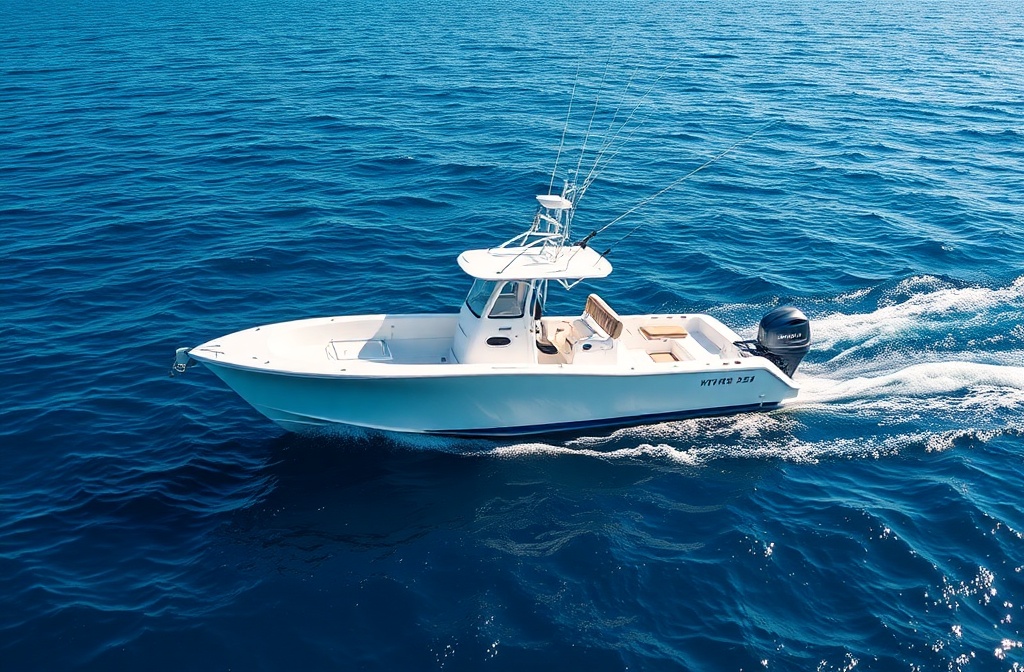
A center console boat is a type of motorized vessel where the helm station is positioned in the middle of the deck, leaving the bow and stern completely open. This layout maximizes usable deck space, provides 360-degree walkaround access, and makes center consoles one of the most versatile platform designs in recreational boating today.
Why Center Consoles Dominate the Fishing Market
Center console boats account for roughly 40% of all new powerboat sales in the United States — and it’s not hard to see why. The open-deck design lets anglers move freely from bow to stern without obstruction, a critical advantage when fighting a fish or setting lines. Whether you’re working inshore flats, running offshore to the Gulf Stream, or cruising coastal waters, the center console adapts where other hull styles can’t.
Modern center consoles have expanded far beyond their fishing roots. Today’s premium models feature amenities like enclosed heads, seating for eight or more passengers, integrated coolers, live wells, and serious electronics suites. Manufacturers like Boston Whaler, Grady-White, Pursuit, and Robalo have pushed the category into legitimate family cruiser territory without sacrificing fishing utility.
When evaluating a center console, check the gunwale height. Taller gunwales (18"+ above the deck) are critical for offshore work in rough seas. Lower-profile boats work great inshore but can feel exposed in choppy offshore conditions.
Center Console Size Classes Explained
Sub-20-Foot Models: Inshore Specialists
Boats under 20 feet are trailerable, fuel-efficient, and ideal for bays, rivers, and protected coastal waters. Popular models include the Boston Whaler 170 Montauk and the Robalo R180. Expect single-engine configurations between 90–150 HP and price points ranging from $20,000 to $55,000 new.
20–28-Foot Models: The Sweet Spot
This range is the most popular segment. Boats in this class handle nearshore and moderate offshore runs comfortably. Twin-engine options become available around 24 feet, adding redundancy and maneuverability. Models like the Grady-White Freedom 235 and Pursuit OS 255 deliver genuine offshore capability with practical fuel consumption. Budget $55,000 to $180,000 depending on brand and options.
29-Foot and Above: True Offshore Machines
Purpose-built for bluewater fishing and extended passages, these large center consoles are equipped with triple or quad outboard engines, large fuel tanks (often 300+ gallons), enclosed helm stations, and overnight capability. The Grady-White Canyon 336, Boston Whaler 380 Outrage, and Hydra-Sports 3300 CC represent this elite tier. Prices start around $250,000 and can exceed $1 million fully rigged.
Larger center consoles above 28 feet often require a different trailer setup and may not fit standard residential driveways. Confirm slip or storage availability before purchase — marina storage can add $5,000–$15,000 annually to your cost of ownership.
Key Features to Evaluate Before Buying
Hull Construction and Deadrise
Most center consoles use fiberglass construction. A higher deadrise angle (20–24 degrees at the transom) means a softer ride in chop but slightly reduced stability at rest. Shallower deadrise hulls (12–16 degrees) are more stable at anchor and work well in calm inshore waters. For offshore use, prioritize deadrise over 20 degrees.
Engine Configuration
Outboard engines dominate the center console market for a simple reason: they’re easier to service, more fuel-efficient at cruising speeds, and leave the entire bilge area free for storage. Single-engine setups reduce fuel costs but offer no redundancy. Twin engines are the standard choice for serious offshore work. Always verify the max HP rating on the boat’s capacity plate — running an underpowered or overpowered engine is both inefficient and unsafe.
Livewell and Storage Capacity
Serious anglers should count livewells (ideally two — one for bait, one for catch), rod storage capacity (look for 6+ holders), and fishbox volume measured in quarts. A 150-quart insulated fishbox is adequate for day trips; dedicated offshore boats benefit from 300+ quarts of fish storage. Don’t overlook dry storage under the console — this space takes electronics, safety gear, and personal items on longer trips.
Before test-driving any center console, bring your typical gear load — rods, tackle bags, cooler, safety equipment. A boat that feels spacious empty can quickly become crowded with a full day-trip kit and four passengers. Walk the deck while loaded to assess real working space.
New vs. Used Center Consoles
The used market for center consoles is robust and can offer significant savings — a 5-year-old hull often sells for 30–40% less than its original MSRP. Focus your inspection on the following: hull osmotic blisters (common in older fiberglass), transom integrity (soft spots indicate water intrusion), engine hours (400 hours on a well-maintained four-stroke outboard is modest; 800+ warrants careful evaluation), and electrical system condition.
Boston Whaler’s unsinkable foam-filled construction holds resale value better than almost any other brand — a well-kept 10-year-old Whaler can sell for 60–70% of original cost. Grady-White similarly commands premium resale. When budget shopping, Carolina Skiff and Tracker offer reliable value at the lower end of the market.
Running Costs to Budget For
A 24-foot twin-engine center console burning premium unleaded at average cruising speed (25–30 knots) will consume 15–22 gallons per hour total. Factor in:
- Fuel: $150–$300 per full-day offshore trip at current prices
- Annual engine service: $400–$800 per outboard (impeller, belts, fluids, anodes)
- Insurance: Typically 1.5–2% of hull value annually
- Storage: $2,000–$15,000/year depending on wet slip vs. dry stack vs. trailer
- Bottom paint: $500–$1,500 if kept in saltwater slip
Frequently Asked Questions
What is a center console boat best used for?
Center consoles excel at fishing — both inshore and offshore — but modern versions work equally well for family recreation, water sports, and coastal cruising. Their open layout and all-around deck access make them the most versatile single hull design available.
Are center console boats good in rough water?
Larger center consoles (24+ feet) with high-deadrise hulls handle rough offshore conditions competently. Smaller sub-20-foot models are better suited to protected waters. The absence of an enclosed cabin means passengers are exposed to spray and weather, so operator judgment matters.
What size center console is best for beginners?
A 20–22 foot center console with a single 150 HP outboard is an ideal starter. It’s manageable to trailer, forgiving to dock, and capable enough for inshore and nearshore fishing. As skills develop, stepping up to a larger twin-engine model makes sense.
How long do center console boats last?
A well-maintained fiberglass center console hull can last 30–40 years. Outboard engines typically reach 1,500–3,000 hours before needing major overhaul. Regular freshwater flushing, annual servicing, and proper storage dramatically extend service life.
What’s the difference between a center console and a bay boat?
Bay boats are a subcategory of center console designed specifically for shallow-water inshore fishing. They feature extra-shallow drafts (often under 12 inches), lower profiles to reduce wind resistance on flats, and poling platforms at the stern. Standard center consoles are designed for deeper water and choppier conditions.