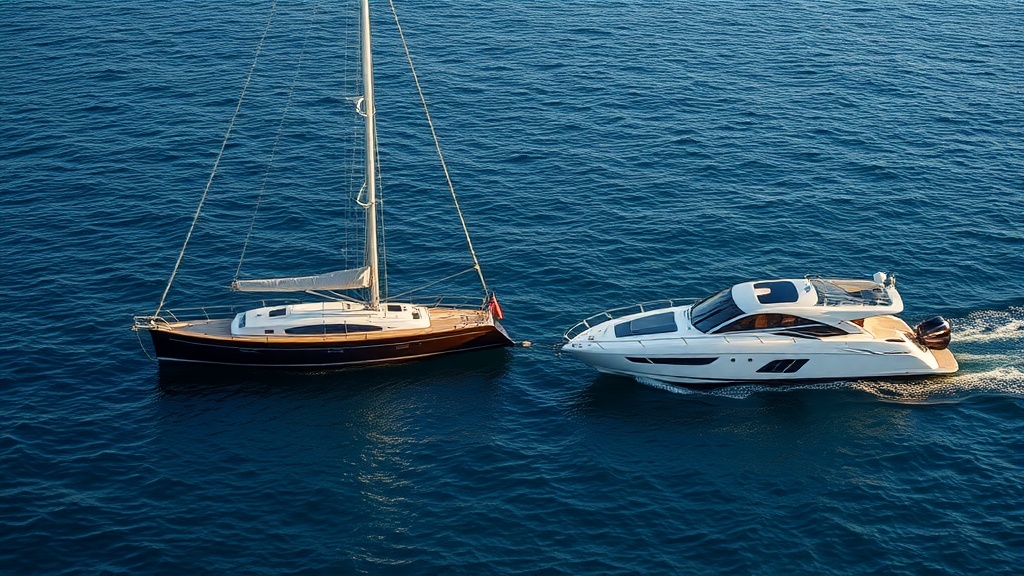
Choosing between a sailboat and a powerboat is one of the biggest decisions any boater will make. Both offer incredible experiences on the water, but they suit very different lifestyles, budgets, and goals. Whether you’re dreaming of coastal cruising, offshore passages, or weekend watersports, understanding the core differences will help you invest wisely.
What Is a Sailboat?
A sailboat is propelled primarily by wind using one or more sails. While most modern sailboats also have auxiliary diesel engines for maneuvering in tight spaces or motoring through calm patches, wind power is the main source of propulsion. Sailboats range from small day-sailers under 20 feet to blue-water cruising vessels over 50 feet capable of circumnavigating the globe.
Pros of Sailboats
- Lower fuel costs: Wind is free. Once you’ve learned to harness it, your ongoing operational costs drop dramatically compared to a powerboat.
- Long-range capability: Sailboats are built for passage-making. With adequate provisioning, a well-found sailboat can cross oceans with minimal engine use.
- Romantic, immersive experience: There’s nothing quite like sailing under a full main and genoa, engine off, hearing only the water and wind. Many sailors describe it as meditative.
- Lower environmental impact: Less fuel consumption means a smaller carbon footprint, an increasingly important consideration for modern boaters.
- Strong resale value on quality brands: Well-maintained blue-water sailboats from reputable builders (Beneteau, Catalina, Hunter, Island Packet) hold their value reasonably well.
Cons of Sailboats
- Steeper learning curve: Sailing requires real skill: understanding wind angles, trim, tacking, jibing, and reading weather. Expect months of practice before you feel truly comfortable.
- Slower speeds: Most cruising sailboats average 5 to 8 knots. A powerboat will cover the same distance in a fraction of the time.
- Weather dependence: Light winds mean slow going (or motoring). Heavy weather demands respect and experience.
- Less cockpit space and amenities: The mast, boom, and rigging eat into deck space. Interior layouts prioritize function over luxury on many models.
What Is a Powerboat?
A powerboat uses one or more engines, inboard, outboard, or sterndrive, to move through the water. The category is broad, covering everything from small fishing boats and bowriders to massive motor yachts and offshore sport fishers. Speed and convenience are the defining characteristics.
Pros of Powerboats
- Speed and efficiency: Need to get from point A to point B quickly? A powerboat wins every time. Cruising speeds of 20 to 35 knots are common, with performance boats going much faster.
- Ease of use: Powerboats are generally easier to learn. Basic boat handling, docking, and navigation are more intuitive without the complexity of sail management.
- Versatility: Fishing, watersports, day cruising, overnight trips. Powerboats handle it all with minimal compromise.
- More deck and cockpit space: Without rigging and a mast, powerboats often offer more usable outdoor living space, great for families and entertaining.
- Wider range of activities: Wakeboarding, waterskiing, tubing. Activities that require boat-generated wakes or precise speed control are the powerboat’s domain.
Cons of Powerboats
- High fuel costs: This is the big one. Running a twin-engine cruiser at cruising speed can cost $100 to $300 or more per hour in fuel. Costs add up fast.
- Higher maintenance: Engines require regular servicing, oil changes, impeller replacements, zincs, fuel filters, and more. Twin-engine boats double the maintenance burden.
- Limited range: Most powerboats are not set up for extended offshore passages. Range is dictated by fuel capacity.
- Depreciation: Many powerboats, especially entry-level brands, depreciate faster than comparable sailboats.
Key Factors to Help You Decide
How Will You Use the Boat?
This is the most important question. If you want to explore distant anchorages at a leisurely pace and don’t mind the journey taking longer, a sailboat suits you perfectly. If you want to spend weekends waterskiing, fishing offshore, or reaching your favorite anchorage before noon, a powerboat makes more sense.
What’s Your Budget?
Purchase price is only part of the equation. Factor in fuel, insurance, slip fees, and maintenance. Sailboats typically cost less to operate annually. Powerboats, especially larger ones, can drain a budget quickly on fuel alone.
How Much Time Do You Have?
Sailing rewards patience and investment in learning. If you’re passionate about mastering a skill, it’s deeply satisfying. If you have limited weekends and just want to get on the water and have fun immediately, a powerboat removes the barrier to entry.
Who’s Coming Along?
Families with young children often gravitate toward powerboats for the space, speed, and activity options. Couples and solo sailors who value tranquility tend to prefer sailboats. There’s no wrong answer, just different lifestyles.
The Verdict
Neither sailboats nor powerboats are objectively better. They serve different masters. The classic advice still holds: if you want to go somewhere, sail; if you want to do something when you get there, power. Many experienced boaters end up owning both at different stages of life.
The best boat is always the one that gets you on the water most often. Start by being honest about how you plan to use it, what you can afford to operate, and how much time you’re willing to invest in learning. That answer will point you clearly toward sails or engines.