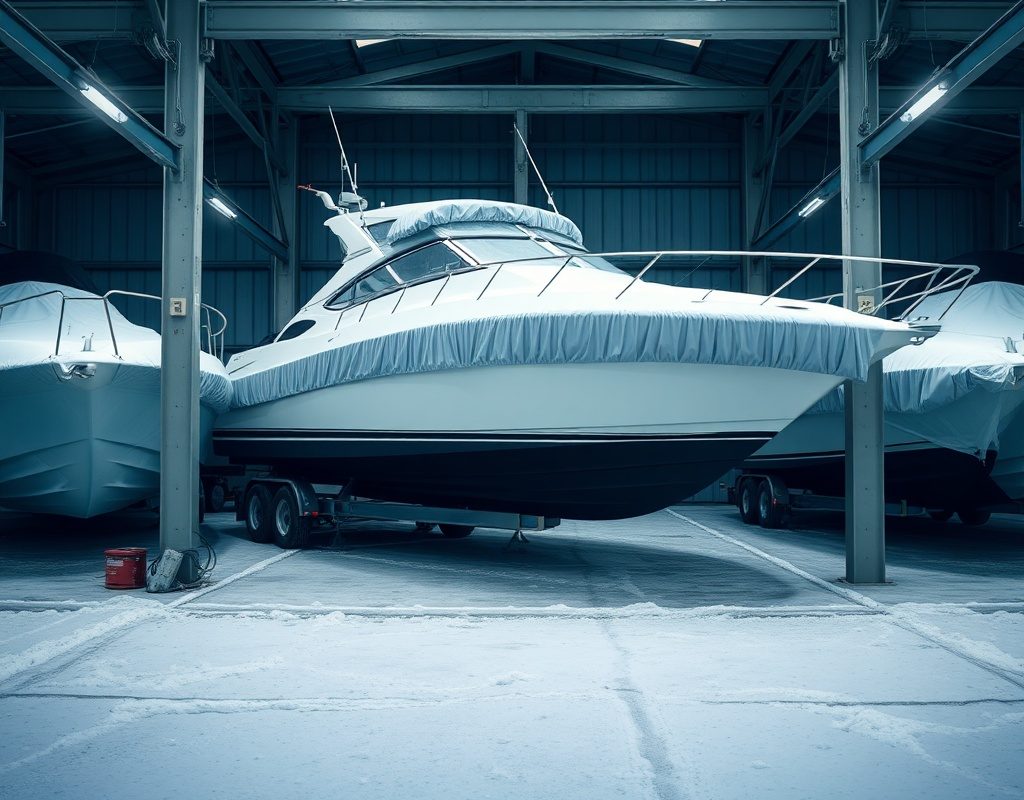
Owning a yacht is not only an opportunity to enjoy luxurious leisure and cocktail parties until morning, but also a necessity for qualified service. As the weather gets colder, any boat or yacht owner begins to think about where to store their treasure at the end of the boating season, which lasts from May to November. If a small boat is relatively straightforward, then winter storage of a large boat requires certain knowledge and conditions. It must be lifted ashore and “mothballed,” since low temperatures can negatively affect the mechanisms and systems of watercraft, which will create many unnecessary complications during further operation.
Main Problems with Storing Boats and Yachts in Water
1. Damage to the hull integrity of a boat after contact with water.
Rivers and lakes contain a large amount of biochemical impurities that change the properties of water. This negatively affects the condition of yacht and boat hulls, namely, growths form on the hull or the hull is subject to corrosion. To reduce the consequences of the aforementioned factors, hulls are treated with special compounds, for example, antifouling paint.
2. The need to choose a reliable mooring location.
You should not leave watercraft in water without proper securing, even for a short time. At best, it can be damaged after collisions with neighboring vessels, and at worst, it could drift away on its own.
3. Increased probability of hull compression by ice.
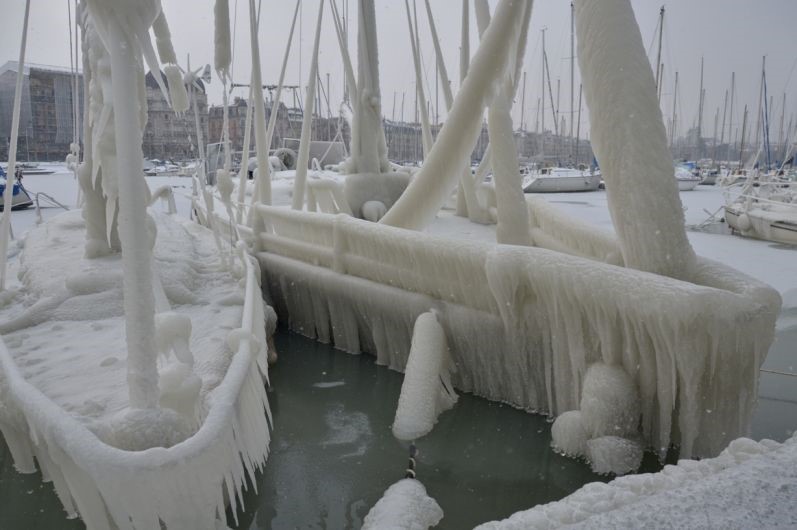
Leaving a yacht or boat in water during winter is dangerous, as ice can crush the hull of the watercraft. Prudent vessel owners lift it ashore, and when spring arrives, launch it back into the water. For this, you can purchase a special trailer or use a floating boat lift, so you wouldn’t have to rent a space on shore.
How to Prepare a Yacht or Boat for Winter Storage?

Depending on technical capabilities and weather conditions, there are options for winter storage of a vessel in a boat shed, in the open air, or under a canopy. The first method is the safest, since drying of the yacht in a boat shed happens faster, which has a positive effect on its technical condition. Additionally, this makes it possible to begin repair work and maintenance of watercraft at an early stage before launching into the water.
Several steps must be taken to prepare a vessel for winter storage
1. Change the oil.
Since acids and water can lead to engine corrosion, you need to replace the filter and clean it of moisture by blowing it with a powerful stream of air. Only after this is new oil added.
2. Fill in new antifreeze.
To protect engine components from corrosion and freezing, it is recommended to change the antifreeze, which should be selected in accordance with the manufacturer’s specifications.
3. Use conservation oil.
Rotating engine parts will not be affected by cold and frost if you spray conservation oil on the rotating, but not running engine.
4. Remove the drive belts.
Constantly tensioned drive belts can crack at any moment, especially under heavy load. Therefore, it is advisable to loosen or completely remove them for the winter.
5. Lubricate the steering system.
To ensure the yacht runs smoothly through the water at the start of the new season, it is advisable to lubricate the steering mechanisms. All connection areas should be well treated with water-repellent lubricant.
6. Monitor the battery.
With the onset of cold weather, it is important to ensure that the battery does not completely discharge and to charge it periodically. Remove it and fill it with distilled water.
7. Seal the exhaust outlet.
On most boats, the exhaust openings are so large that pests can easily enter the engine. Therefore, the exhaust outlet must be sealed. Adhesive tape is suitable for this.
8. Remove interior elements sensitive to cold.
For winter, it is necessary to remove electronics that may fail under the influence of excessive moisture and low temperatures. It is also important to remove canvas, leather, and other organic materials, as they are easily subject to rot under conditions of high humidity.
9. Flush antifreeze through the water pipes.
Drain the water from the water tanks and run antifreeze through the water pipes.
10. Wash the yacht and coat the hull with wax.
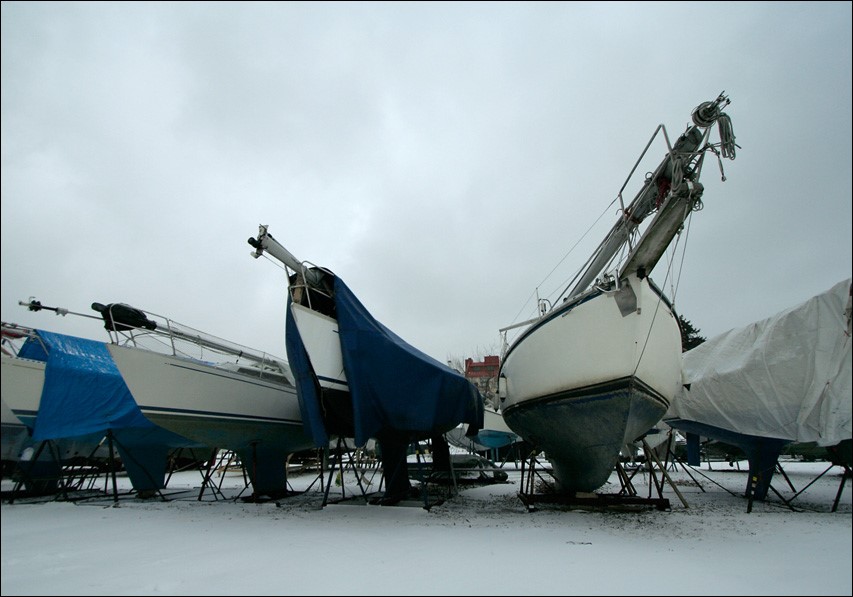
Thoroughly wash the yacht inside and out. To prevent rust formation when storing the boat in the open air, wax the hull. To provide protection for the vessel from mildew and dirt, put a cover on it.
By following these guidelines, you will be able to ensure a long lifespan for your boat or yacht.