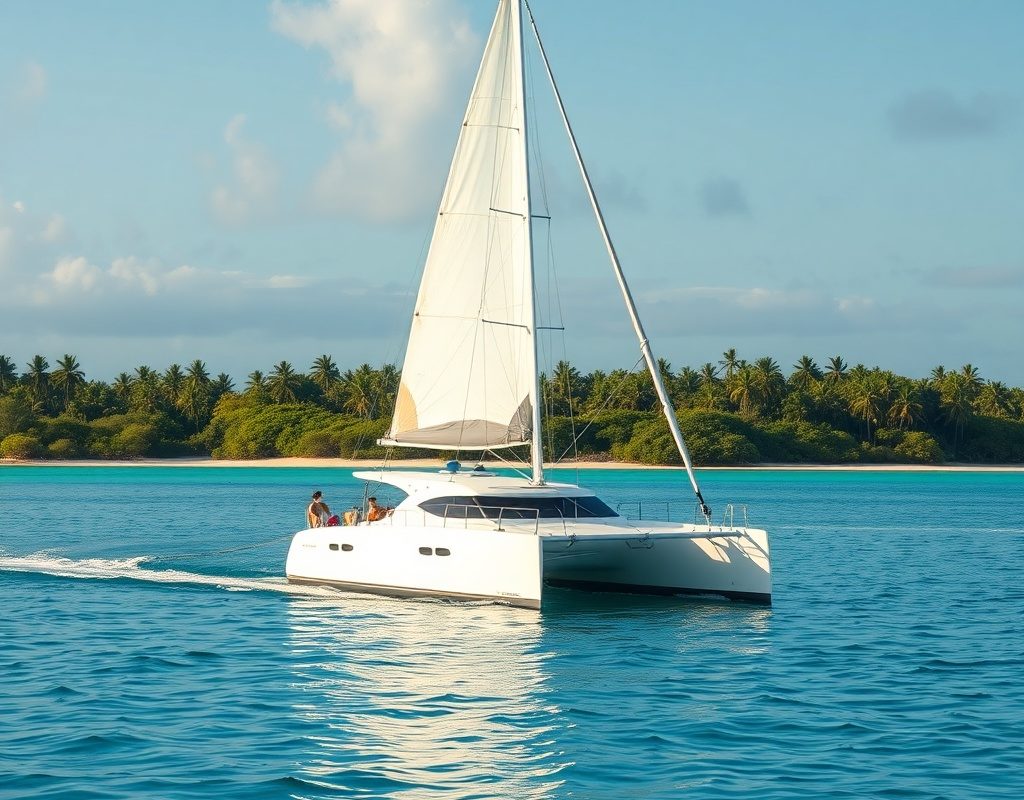
Catamaran boats use two parallel hulls instead of one central hull. That simple structural difference changes almost everything about how the boat feels: stability at rest, deck space, efficiency, handling, and the way it moves through chop.
What is a catamaran?
A catamaran is a twin-hull boat connected by a deck or bridge structure. The two hulls create a wide stance on the water, which gives the boat excellent initial stability. This is why catamarans are common in cruising, sailing, ferries, fishing, and modern powerboat design.
Compared with a monohull, a catamaran usually has more usable beam and deck area for the same overall length. That extra space is one of the biggest reasons owners choose them for family cruising or long days on the water.
Main types of catamaran boats
- Sailing catamarans: popular for charter cruising, liveaboard use, and long-distance passages.
- Power catamarans: twin-hull motorboats focused on comfort, efficiency, and space.
- Fishing catamarans: stable platforms with wide cockpits and good offshore capability.
- Performance cats: fast boats designed for speed, racing, or high-energy recreational use.
- Commercial catamarans: ferries and workboats that benefit from stability and passenger capacity.
Advantages of catamarans
The first advantage most people notice is stability. A catamaran rolls less at anchor than many monohulls, which makes moving around easier and reduces fatigue. The wide deck also gives passengers more room and often creates better separation between cabins, cockpit, and saloon spaces.
Efficiency can be another benefit. Narrow hulls can move through the water with less resistance, especially at moderate speeds. On cruising catamarans, this can mean good range and comfortable passage-making. On power cats, it can mean a softer ride in certain sea states when the hull design is well matched to the boat’s speed.
Tradeoffs and limitations
Catamarans are wider, and width affects everything from marina availability to haul-out costs. Slips can be harder to find and more expensive. The wide stance also changes handling in tight quarters, especially in wind.
Not every catamaran rides better than every monohull. Poor bridge-deck clearance can cause slamming, and lightweight boats can feel lively in confused seas. Buyers should test the boat in realistic conditions, not only on a calm demo ride.
Buying checklist
- Check bridge-deck clearance and signs of slamming damage.
- Confirm marina, storage, and haul-out options for the boat’s beam.
- Inspect both hulls, bulkheads, engine rooms, and cross-structure connections.
- For sailing cats, review rig condition, sail inventory, and load-carrying limits.
- For power cats, compare fuel burn, engine access, and handling at docking speeds.
Bottom line
A catamaran is ideal if you value stability, deck space, and comfort, especially for cruising, fishing, or extended time aboard. The tradeoff is beam: storage, docking, and maintenance logistics matter more than they do with many monohulls. Buy the layout and hull design that fit your real use, not just the biggest deck you can find.