What Are the Main Types of Boat Engines?
Choosing the right boat engine is one of the most critical decisions you’ll make as a boat owner. The powerplant you select affects everything from fuel efficiency and performance to maintenance costs and resale value. In this guide, we’ll break down the five primary boat engine types, compare their strengths and weaknesses, and help you figure out which one best suits your boating lifestyle.
1. Outboard Motors
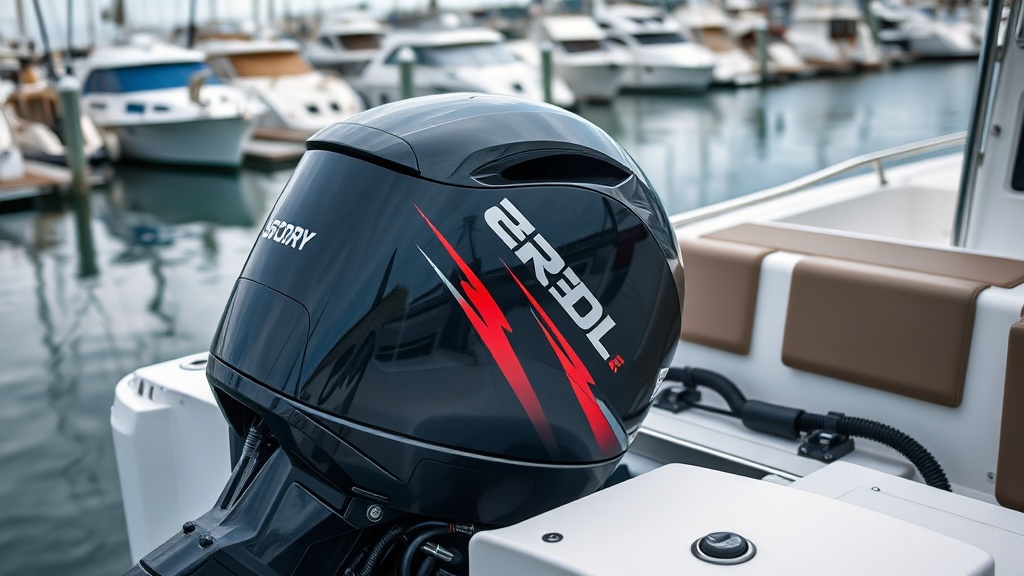
Outboard motors are the most popular boat engine type in the United States, and for good reason. These self-contained units mount on the transom (the stern wall) of the boat and include the engine, gearbox, and propeller in one package.
Pros of Outboard Motors
- Easy to service and replace — you can swap the whole unit if needed
- Excellent fuel efficiency — modern 4-stroke outboards are highly economical
- Shallow water capability — the motor tilts up to navigate skinny water
- More interior space — no engine box taking up room inside the hull
Cons of Outboard Motors
- Exposed to weather and salt spray
- Less ideal for large vessels over 30 feet
- Can be targets for theft
Best for: Fishing boats, jon boats, center consoles, pontoon boats, and any vessel under 30 feet.
2. Inboard Engines
Inboard engines are mounted inside the hull of the boat, typically toward the center or rear, and drive the propeller through a shaft that passes through the hull. They’re the traditional choice for larger vessels and performance boats.
Pros of Inboard Engines
- Better weight distribution — the engine sits low and centered, improving stability
- Ideal for watersports — ski boats and wakeboard boats rely on inboards
- Longer lifespan — protected inside the hull from the elements
- Powerful options — available in high-horsepower configurations
Cons of Inboard Engines
- More complex and expensive to service
- Cannot operate in very shallow water
- Takes up cabin or storage space
Best for: Ski boats, wake boats, cabin cruisers, and performance vessels.
3. Sterndrive (Inboard/Outboard or I/O)
The sterndrive — also called an inboard/outboard or I/O — combines elements of both engine types. The engine sits inside the hull, but the drive unit (outdrive) hangs off the transom like an outboard.
Pros of Sterndrive Engines
- Versatile performance — good balance between power and maneuverability
- Trimmable outdrive — adjust the drive angle for optimal efficiency
- More power than most outboards — large displacement gas or diesel options
Cons of Sterndrive Engines
- The outdrive bellows require regular inspection — a failure can sink the boat
- Higher maintenance costs than outboards
- Not ideal for saltwater without diligent flushing and care
Best for: Bowriders, deck boats, cuddy cabins, and mid-size family boats.
4. Jet Drive Engines
Jet drives propel the boat by sucking water in through an intake and expelling it at high pressure through a nozzle — no exposed propeller. Personal watercraft (PWC) like Jet Skis use jet propulsion, as do some specialized boats.
Pros of Jet Drive Engines
- No exposed propeller — dramatically safer around swimmers
- Exceptional shallow water performance — ideal for rivers and flats
- Responsive steering — directional control through thrust vectoring
Cons of Jet Drive Engines
- Less fuel efficient than propeller-driven boats at cruise speeds
- Can ingest debris, weeds, and sand
- No thrust in reverse without a thrust reverser bucket
Best for: River boats, personal watercraft, rescue craft, and shallow-water specialty vessels.
5. Diesel Engines
Diesel engines are typically found in inboard or sterndrive configurations on larger boats. They run on diesel fuel and are known for their durability and torque.
Pros of Diesel Engines
- Exceptional fuel economy — diesel delivers more energy per gallon than gasoline
- Longevity — marine diesel engines commonly run 5,000+ hours before overhaul
- High torque — ideal for heavy displacement hulls
- Safer fuel — diesel is less volatile than gasoline
Cons of Diesel Engines
- Higher upfront cost
- Heavier than equivalent gasoline engines
- Specialized mechanics required for service
Best for: Long-range cruisers, trawlers, sportfishing yachts, and commercial vessels.
Boat Engine Types Comparison: Quick Reference
Here’s a simple breakdown to guide your decision:
- Fishing and shallow water → Outboard or Jet Drive
- Watersports and wake boats → Inboard
- Family day boating → Sterndrive or Outboard
- Long-distance cruising → Diesel Inboard
- Personal watercraft → Jet Drive
Final Thoughts
There’s no single “best” boat engine — the right choice depends on how and where you plan to boat, your budget, and your willingness to handle maintenance. Outboards dominate for their versatility and ease of ownership. Inboards rule the watersports world. Diesels are the go-to for serious blue-water cruisers. Understanding these differences before you buy will save you significant money and frustration on the water.
Still not sure which engine type fits your needs? Browse our boat reviews to see how different powerplants perform in real-world conditions.