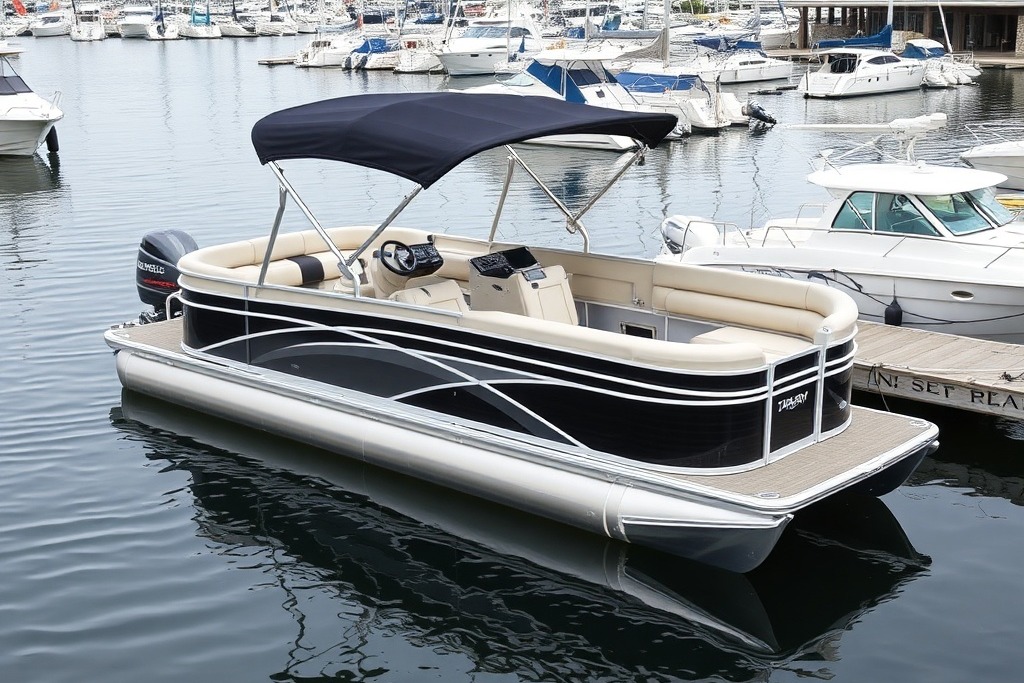
A pontoon boat is a flat-deck vessel supported by two or three aluminum tubes (pontoons), designed for stable cruising, family recreation, and easy entertaining on lakes and calm coastal water.
For first-time buyers, pontoons are attractive because they are predictable to handle, roomy for passengers, and available across a broad price range. The challenge is that many listings look similar, while real value depends on specs that are not obvious at first glance. If you want to avoid expensive mistakes, focus on hull setup, engine match, load capacity, and total ownership cost—not just upholstery and electronics.
What Makes a Pontoon Different from Other Boats
Unlike V-hull runabouts, a pontoon prioritizes deck space and stability. The wide platform makes boarding easy for kids, older passengers, and pets. At anchor, the boat feels level and comfortable, which is why pontoons are popular for social cruising, fishing with family, and sunset trips.
Typical use cases
- Leisure cruising and swimming stops
- Family day trips on lakes and rivers
- Entry-level watersports (on higher-horsepower setups)
- Light fishing layouts with flexible seating
Key Specs You Should Compare First
Length and deck layout
Most buyers choose between 18 and 26 feet. Shorter boats are easier to store and trailer; longer boats improve ride comfort and passenger flow.
- 18–20 ft: compact, budget-friendly, ideal for small groups
- 21–24 ft: best all-around segment for families
- 25–26+ ft: maximum comfort, more storage, often premium pricing
Tube configuration (2-tube vs tri-toon)
Two-tube pontoons are efficient for relaxed cruising. Tri-toons add a center tube, better lift, and cleaner performance at speed.
Engine size and performance match
Do not pick engine power in isolation. Match it to your actual use:
- 60–90 HP: calm cruising, light loads
- 115–150 HP: stronger all-purpose setup for larger crews
- 175+ HP: towing sports and fast transit on bigger water
Passenger capacity
Read both person count and weight rating. A “12-person” badge can be misleading if your crew includes heavier adults, coolers, and gear. Capacity is a safety number, not a comfort guarantee.
Realistic Price Ranges
In today’s market, pontoon pricing is heavily influenced by engine package, trailer inclusion, and electronics level.
- $15K–$30K: older used boats, basic new entry trims in some regions
- $30K–$50K: mainstream family segment, common sweet spot
- $50K–$80K: premium trims, tri-toons, stronger engines, upscale finishes
Budget at least 10–20% above purchase price for taxes, registration, safety gear, insurance, and first-year service items.
New vs Used Pontoon: How to Decide
New boat advantages
- Warranty coverage and cleaner ownership history
- Latest helm electronics and efficiency improvements
- Lower near-term repair uncertainty
Used boat advantages
- Lower entry price and slower early depreciation
- Potentially better value if maintenance history is strong
- More room in budget for upgrades
Used boat checklist before paying
- Compression and engine diagnostics report
- Tube integrity: dents, leaks, weld condition
- Deck softness or rot signs near gates and helm
- Electrical reliability: lights, pumps, gauges
- Trailer condition: tires, bearings, brake system
Top Pontoon Brands to Consider
Bennington
Known for premium fit and finish, broad model range, and upscale comfort features. Usually priced above average but strong for buyers prioritizing quality feel.
Sun Tracker
Mainstream value brand with broad dealer footprint. Good for practical buyers who want simple ownership and predictable family layouts.
Manitou
Strong reputation in performance-oriented tri-toons, often chosen by buyers who want higher-speed capability without moving to a different boat class.
What to Inspect Before Signing
- Service records and engine hours
- Title/HIN consistency with listing details
- Seat base, hinges, and flooring wear points
- Bimini frame strength and stitching quality
- Battery age and charger setup
- Navigation and safety compliance equipment
For used units, independent marine inspection is money well spent. The inspection cost is small compared with post-purchase repairs.
Final Buying Framework
Choose your pontoon in this order: intended use → crew size → water conditions → tube/engine match → budget ceiling. If a deal is flashy but fails this sequence, walk away. The right pontoon should feel easy to operate, safe under load, and affordable to maintain over multiple seasons.
FAQ
Is a pontoon a good first boat?
Yes. It is one of the easiest formats to handle and board, especially for families and mixed-experience crews.
How much horsepower do I need for a family pontoon?
For most families, 115–150 HP is the practical all-round range. Go higher if towing or carrying heavy loads regularly.
Are tri-toons worth the extra cost?
If you want better speed, cleaner turning, or watersports capability, tri-toons are usually worth it. For calm cruising only, two-tube setups can be enough.
What is the biggest mistake buyers make?
Buying by appearance and skipping mechanical checks. Engine and structure condition matter far more than cosmetic upgrades.
Should I buy at boat show season?
Boat shows can offer package incentives, but always compare true out-the-door pricing against dealer inventory deals before committing.
Common Pontoon Buying Mistakes
- Choosing by seating upholstery instead of tube and engine match
- Ignoring trailer condition and local launch logistics
- Skipping written service records on used boats
- Underestimating insurance and storage costs
A disciplined buyer compares total ownership, not only sale price. The right pontoon should still feel affordable after a full season of fuel, service, and storage.