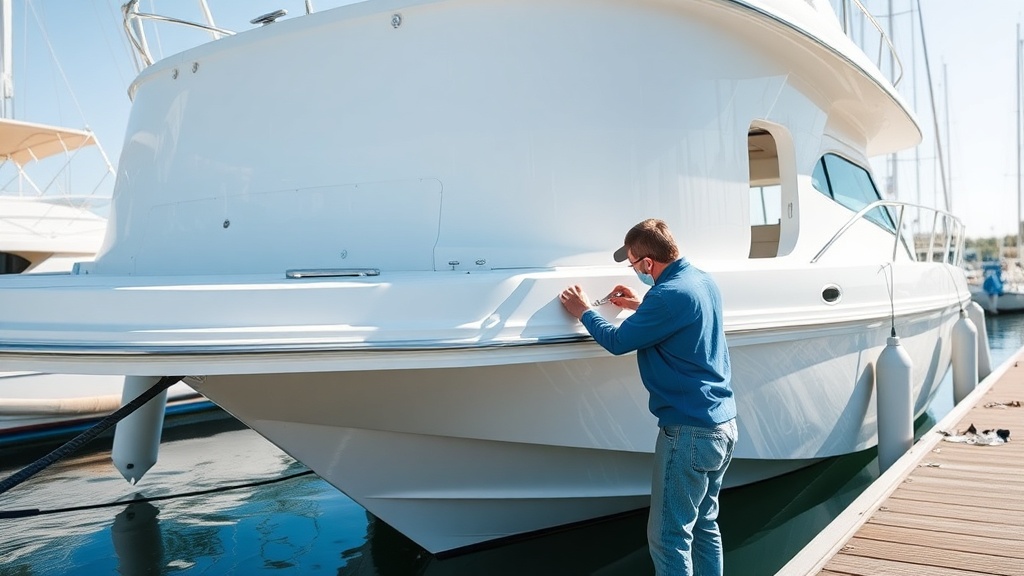
After months in storage, your boat deserves a thorough inspection before it hits the water. A proper spring commissioning isn’t just about aesthetics — it’s about safety, reliability, and protecting your investment. This comprehensive spring boat maintenance checklist will walk you through everything from hull to helm, so you can launch with confidence.
Hull and Exterior Inspection
Start from the bottom up. The hull takes the most punishment during storage and launch, so give it a careful once-over before anything else.
Bottom paint and hull integrity: Inspect the entire hull for cracks, blisters, or osmotic damage. Small surface cracks can be repaired with marine epoxy, but deeper structural damage requires professional attention. If your boat sits in saltwater, apply fresh antifouling paint before launch — this prevents barnacle buildup and protects fiberglass over the long haul.
Through-hulls and seacocks: Open and close every seacock to make sure they move freely. Seized seacocks are a common spring discovery after a winter without exercise. Lubricate with waterproof marine grease and replace any that feel stiff or show corrosion. This is non-negotiable — a failed seacock can sink your boat.
Zinc anodes: Check all zincs on the hull, prop shaft, and rudder. Replace any anode that’s more than 50% depleted. Zincs sacrifice themselves to protect your boat’s metal components from galvanic corrosion, and they can’t do their job if they’re spent.
Engine and Mechanical Systems
The engine is the heart of your powerboat or auxiliary sailboat. A few hours here prevents catastrophic failures on the water.
Oil and filters: Change the engine oil and oil filter regardless of how many hours are on them. Oil sitting all winter accumulates moisture and acids. Fresh oil at the start of the season is cheap insurance. Replace the fuel filters too — water and microbial growth in fuel tanks are common after winter storage.
Cooling system: Flush and inspect the raw water cooling system. Check impeller condition — a cracked or hardened impeller will fail, often at the worst possible moment. Replace impellers annually if you run your engine regularly, or every two years at minimum.
Belts and hoses: Inspect all belts for cracking, fraying, or glazing. Squeeze every hose — if it feels brittle or rock-hard, replace it. A burst hose at sea is a very bad day.
Battery banks: Test your house and starting batteries under load. A battery that holds voltage at rest but collapses under load is near failure. Clean battery terminals, check connections, and top off with distilled water if you have flooded lead-acid batteries.
Propeller and Drive Train
Pull the propeller and inspect for dings, bends, or stress cracks. Even small nicks create cavitation and reduce efficiency. Have a bent prop professionally reconditioned — it’s worth it for the fuel savings alone. Check the prop shaft for straightness and inspect shaft seals or cutlass bearings for wear.
Electrical Systems
Marine electrical problems cause more fires and emergencies than almost any other system failure. Don’t rush this step.
Navigation lights: Test every navigation light — bow lights, stern light, masthead, anchor light. These aren’t optional; they’re required by law and essential for safety in low visibility.
Bilge pumps: Test both automatic and manual bilge pumps. Clean the bilge area and make sure the float switch activates the pump correctly. A malfunctioning bilge pump is discovered too late.
Shore power and connections: Inspect shore power cords, plugs, and connectors for corrosion or heat damage. Corroded shore power connections are a leading cause of marina fires. Replace any connector that shows green oxidation or melted plastic.
Electronics: Boot up your chartplotter, VHF radio, depth finder, and any other electronics. Update chartplotter charts if you haven’t done so over winter. A VHF radio is your lifeline to the Coast Guard — test it on a working channel.
Safety Equipment Audit
Coast Guard inspections and your own safety depend on current, functional gear.
Life jackets: Check every PFD for rips, mold, or missing hardware. Automatic inflatable PFDs need to have their CO2 cartridges inspected and rearming kits replaced if they’ve been deployed or the cartridge shows corrosion. Confirm you have the correct number of USCG-approved life jackets for your vessel size and passenger capacity.
Flares and signaling devices: Visual distress signals (flares) expire three years from their manufacture date. Replace any expired flares — and dispose of old ones properly through a local Coast Guard Auxiliary or fire department. Fire extinguishers should be inspected and recharged if the gauge shows low pressure.
First aid kit and emergency gear: Restock your first aid kit, replace expired medications, and make sure your anchor, rode, and dock lines are in serviceable condition.
Standing and Running Rigging (Sailboats)
If you sail, the rigging inspection is the most critical spring task of all.
Inspect every stay, shroud, and swage fitting for broken strands, cracking, or corrosion. Run your hands along the wire — broken strands snag skin and are easy to find by feel. Check turnbuckle threads and pins. Inspect blocks, clutches, and tracks for wear. A dismasting at sea is violent and potentially fatal, so don’t skip a single fitting.
Final Pre-Launch Checklist
Before the boat touches water, run through these final items:
- Drain plug installed (more boats are launched without it than you’d think)
- Fuel tank topped off
- Engine run at the dock to operating temperature
- All systems tested
- Registration and documentation aboard
- Float plan filed with a shore contact
Spring commissioning takes a full weekend if you do it properly. But the time you invest now pays dividends in trouble-free boating all season. Take your time, work methodically, and don’t cut corners on safety systems. The water will be there — make sure your boat is ready for it.