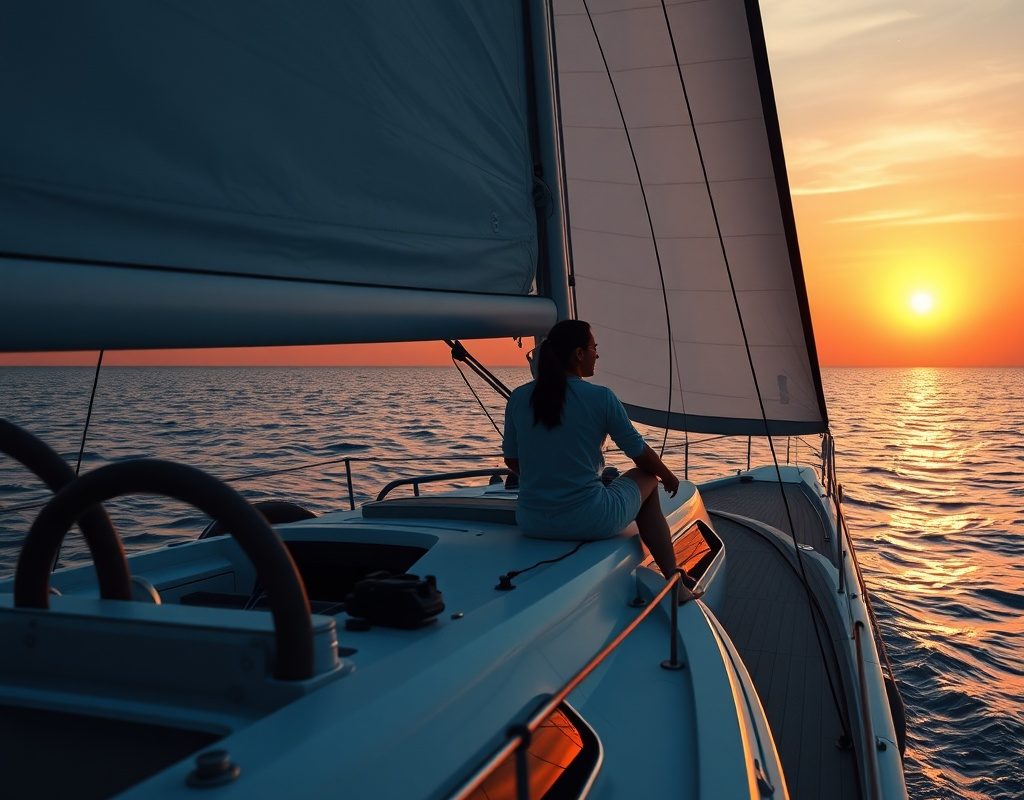
Once upon a time, a boat with an outboard motor was recognized by many residents of the Moscow region as an attribute of a happy luxurious life. Nowadays, this region has several hundred yachts, and a considerable share of the shores of two famous reservoirs (Khimki and Klyazma) is occupied by marinas that have displaced swimmers to tiny islands of paid beaches.
The annual turnover of yacht clubs in the Moscow region is estimated in millions of dollars. True, the capabilities of the reservoirs closest to the Russian capital have been exhausted, so the owners of existing yacht clubs have set sky-high prices for watercraft maintenance services. However, this has not reduced the popularity of yachting and the number of yachtsmen.
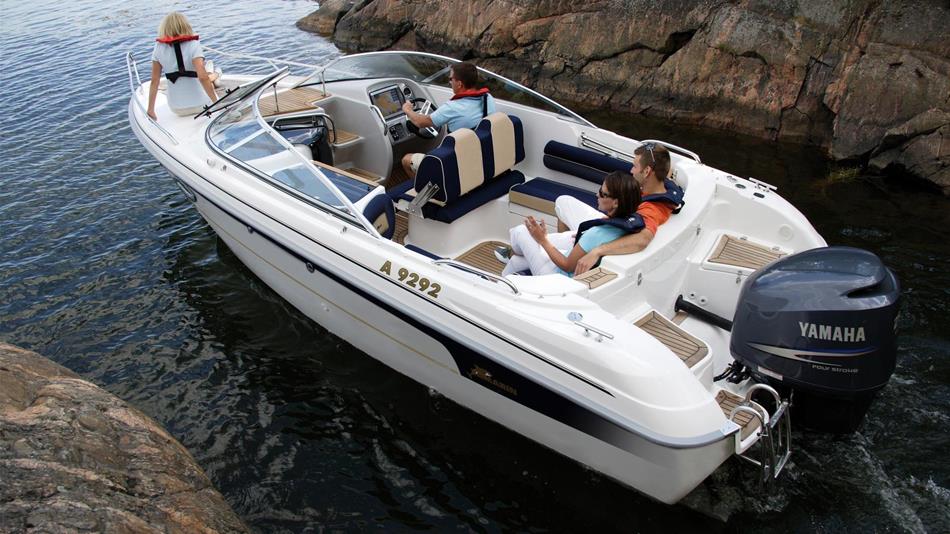
Some owners of floating vessels are true yachting enthusiasts, while other Muscovites have joined them for reasons of prestige, since owning a luxurious yacht is indisputable proof that its owner is a representative of the upper class of society.
Many people who are called the powerful of this world enjoy sailing as a leisure activity. However, relaxing yachting is somewhat more popular. Within the framework of this entertainment, the yacht owner cruises along with a skipper and the lady of his heart from one pier to another, occasionally visiting the elite restaurants of various yacht clubs. Obtaining membership in a Russian yacht club is quite simple – it is enough to be a vessel owner who possesses either a yacht or a speedboat with all the necessary documents.
In the Moscow region, the suitable yachting season lasts only three to four months. The rest of the time, the yacht must be stored somewhere and occasionally repaired. According to one sailing expert, fast and maneuverable yachts approximately seven meters in length are best suited for the Moscow region reservoirs. For it to pass freely under bridges, the mast height should be less than fourteen meters.
As experts note, the majority of Moscow yacht owners have already grown tired of yachting in local waters, since crossing the water area of any of the Moscow region reservoirs on a speedboat can be done in just six to seven minutes, and drifting for hours quickly becomes tedious. Therefore, many capital yachtsmen have begun to master routes to the Volga and Ladoga, the Caspian Sea and Sochi. However, long-distance voyages from the Moscow region are fraught with difficulties. All yachts require periodic refueling. To avoid carrying fuel cans filled with separated diesel on the yacht, vessel owners have to visit commercial ports or intercept a tanker at the anchorage. Furthermore, Russian yacht clubs face the sword of Damocles of environmental legislation, since refueling floating vessels leads to reservoir pollution. Therefore, many Muscovites who have grown tired of sailing in the waters of the Moscow region have already moved their yachts to bodies of water in Turkey, Croatia, and Finland, where their maintenance is also cheaper.
To try yachting, it is not necessary to purchase a yacht for personal use – it can be rented like an expensive limousine. And then you can set sail to explore the seas alone or with the help of an experienced skipper. Any chartered yacht will become a personal resort and a six-star hotel for the Russian who rents it.
On the shores of the Klyazma reservoir, there is a whole range of yacht clubs – “Spartak,” “Petrel,” “Neptune,” and “Aurora,” where you can store your yacht when it is not the right time to go sailing. At the “Neptune” club, yachts are available for charter during the summer weeks. Various water vessels are also available for rent at the “Admiral” sailing club.